
The Blueprint for Circularity: How New DPP Standards are Shaping DATA4CIRC and the Future of Manufacturing
Manufacturing in Europe is on the cusp of a massive transformation. Driven by tightening legislation, which recognises the urgent need to combat climate change, and facing issues of resource depletion and uncertainty caused by increasingly contested supply chains, industry is pivoting towards a circular economy. Key for success in this new system will be the exchange of data. DATA4CIRC offers manufacturers practical solutions and secure data exchange to help make production more eco-friendly, efficient, and competitive. By leveraging secure data spaces, AI-powered life cycle assessments (LCA), and digital models, DATA4CIRC is paving the way for the establishment of sustainable value chains, starting with our Use Cases in the plastics, electronics, and automotive sectors. One of the crucial elements that makes this entire vision possible is standardisation.
Recently, a massive milestone was reached with the publication of the first six European Standards (EN) for the Digital Product Passport (DPP). This blog, written with the support of DATA4CIRC’s project partner, the Deutsches Institut für Normung e.V. (DIN), takes a deep dive into what this means, asking: What exactly are these standards? Why are they so critical to projects like DATA4CIRC? And most importantly, what do companies need to know right now?
Read on for a look at the world of standardisation, the new rules governing the DPPs and how they’re laying the tracks for the future of circular manufacturing.
The Foundation: Why Are Standards Important?
Before we look at the new DPP standards, we must ask a fundamental question: Why do we need standards in the first place?
Standards are sets of established measures, values, or other benchmarks that define how a product has to function or be made. They are based on consensus reached on the state of the art for a given technology and agreed by a recognised body. A standard typically establishes common terminologies, methodologies, and requirements to make a product, process, or service fit for its purpose. They create a generic, universal language. They free up resources for innovation because companies no longer have to reinvent the wheel regarding basic compatibility, quality, or safety. Instead, they can build upon established baselines, ensuring their products can interact within complex global ecosystems without friction. Without standards, is would be chaos.
Think how useful it is that you can walk into a shop and you can buy an AA battery, confident that it will fit in your device; that you can buy A4 paper and know it fits in your printer; or that your new BlueTooth speakers are instantly recognised by your phone. Imaginn if speling dependid on hoo woz righting (it more or less did in the past!) Or, to put the boot on the other foot: remember when you had a box of chargers at home full of cables for different mobile phones? Even now, it sometimes seems like each device needs a different cable…
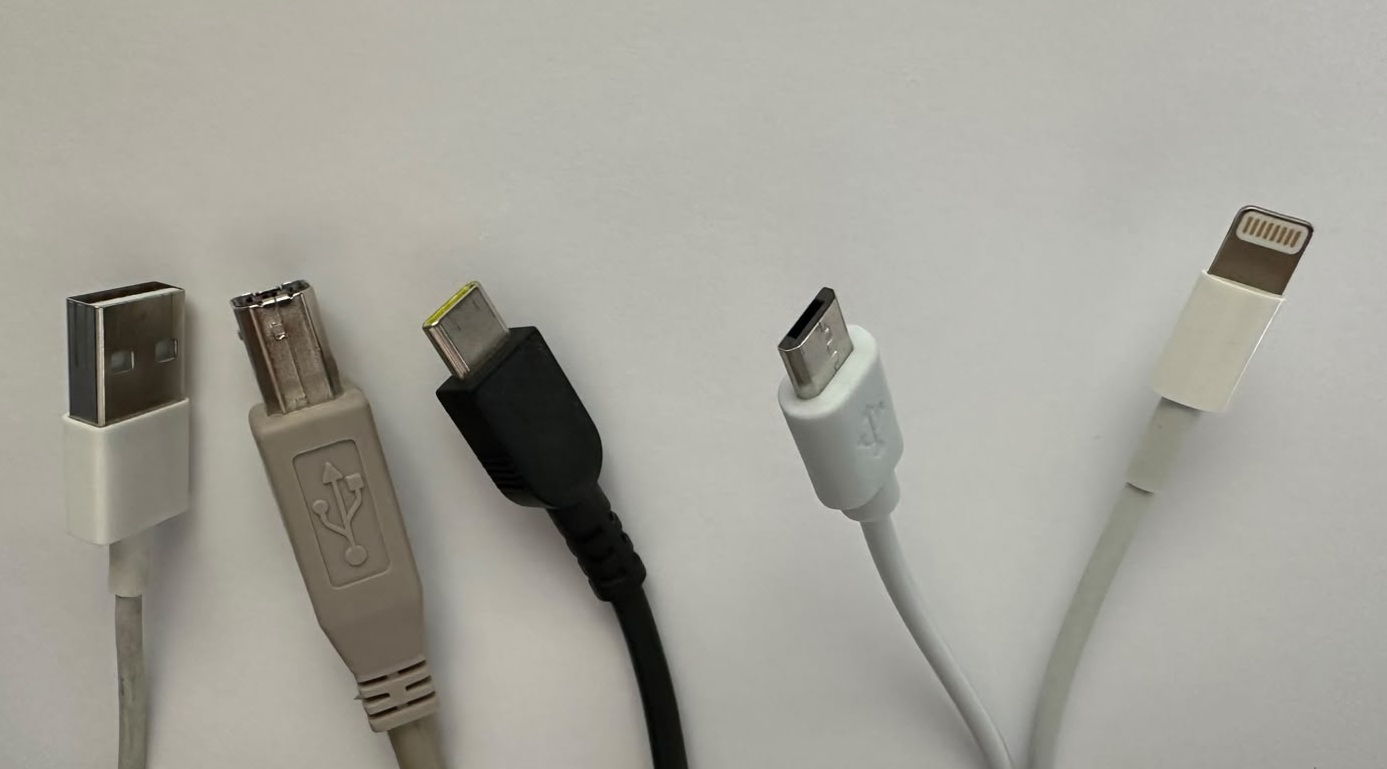
For projects like DATA4CIRC, compliance with standards offers one ultimate benefit: interoperability. In the context of Industry 4.0, interoperability is vital. Modern manufacturing relies on a huge network of platforms, software solutions, sensors, and machines and they must all be able to seamlessly communicate with one another.
Behind the Scenes: How Are Standards Set?
Who gets to decide what these standards should be? The ‘recognised body’ we mentioned above doesn’t mean a single government department or a monopoly tech giant dictating the rules. Standardisation is a highly democratic, transparent, and consensus-driven process involving multiple levels:
1. National Standardisation
Every country has recognized National Standardization Bodies (NSBs), such as DIN and DKE in Germany, AFNOR in France, or BSI in the UK. At this level, experts from diverse backgrounds (industry, commerce, research, the public sector, and civil society) come together to ensure that standards remain neutral and practically applicable, balancing the interests of all stakeholders.
2. European Standardisation
European standards (EN) form the basis of the European single market. The main organisations here are CEN, CENELEC, and ETSI. Through the “delegation principle,” national mirror committees send their top experts to European technical committees. When an EN standard is approved by a majority, it must be adopted at national level by the CEN and CENELEC members, and conflicting national standards must be withdrawn.
3. International Standardisation
For a truly globalised economy, standards must cross continents. Organizations like ISO, IEC, and ITU handle international standardisation. While there is no legal obligation to adopt ISO standards locally, doing so prevents trade barriers and creates a harmonised global market.
The Development Process:
Developing a formal standard is a rigorous process and takes time to ensure different views are considered. A proposal is submitted, the need is evaluated, and a committee with a balanced composition drafts the document. It is then released for public comment, where all objections must be discussed and a consensus reached. Because of this thoroughness, a European or International standard can take over two years to finalise!
However, to avoid holding up business, in fast-moving tech environments (like research projects), we often use Pre-standards (like CEN Workshop Agreements, or CWAs). These are developed much more quickly by a consortium of interested experts, providing a flexible framework that can later evolve into a formal standard.
The Big News: Six New EN Standards for the Digital Product Passport (DPP)
The Digital Product Passport (DPP) is arguably the most important tool for the European circular economy (if they are a theme you’re interested in, then check out the recordings of DATA4ICRC’s two webinars on DPPs here and here). DPPs are digital descriptions of a product’s key features, such as origin, environmental impact, and instructions for recycling. They can be updated throughout the product’s lifecycle, tracking the raw materials used, the manufacturing processes and usage they go through, repairs, upgrades, all the way to recycling and disposal.
To help make DPPs a reality, the European Commission tasked European standardisation organisations to develop harmonised standards. Crafted by the CEN-CENELEC Joint Technical Committee 24 (JTC 24), the first six standards are now published and available via DIN Media! Here is a breakdown of what these new standards are and why they are so vital:
1. DIN EN 18219: Unique Identifiers
For a passport to work, we need to know exactly who or what it belongs to. This standard defines the rules for unique product identifiers, economic operator identifiers, and facility identifiers. It ensures global uniqueness, persistence, and interoperability. It is flexible enough to identify products at three levels: by general model, by specific production batch, or by individual item.
2. DIN EN 18220: Data Carriers
How does a user or a machine physically access the passport? This standard specifies the requirements for the “data carriers” (such as QR codes or barcodes). It covers printing quality, symbology, durability, error correction, and how easily these codes can be recognised by machines and humans alike.
3. DIN EN 18223: System Interoperability
This is the “translation matrix.” It defines the semantic description of a product so that different IT systems can understand the data. By providing common information models, metadata formats, and rules for data dictionary systems, it ensures that technical and organisational interoperability is maintained across diverse supply chains.
4. DIN EN 18216: Data Exchange Protocols
A passport is useless if you cannot securely show it to authorities or partners. This standard ensures that data can be exchanged securely, reliably, and efficiently across an open network without vendor lock-in. It defines the protocols for secure communication, ensuring data integrity across the entire value chain, and making sure the information is easily discoverable and accessible – even on mobile devices.
5. DIN EN 18221: Data Storage, Archiving, and Data Persistence
What happens to a product’s data if the company that manufactured it goes bankrupt 10 years later? This standard is crucial. Based on a decentralised approach, it outlines how DPP data must be stored, archived, and replicated. It supports data persistence, ensuring that vital life cycle and recycling information remains available long after the original economic operator has ceased activity.
6. DIN EN 18222: Application Programming Interfaces (APIs)
Mandated by the European Commission’s Ecodesign for Sustainable Products Regulation (ESPR), this standard defines the API specifications for the DPP. It ensures that product passports are easily searchable and provides the digital infrastructure necessary for IT systems to interact with the passport throughout the product’s entire life cycle.
What Do These Standards Mean for the DATA4CIRC Project?
DATA4CIRC is dedicated to driving the transformation towards environmentally friendly, intelligent production, heavily prioritising human involvement and user-friendly technologies. The project has practical implications: it’s not isolated from reality – it must integrate with real-world industry practices.
This is where DIN’s role in the project becomes paramount. As the leader of standardisation activities within DATA4CIRC, DIN is doing much more than just observing – standards provide the decision-making roadmap that determines the best approach for DATA4CIRC. Their tasks include:
- Compiling an overview of relevant published standards.
Before creating new standards, we need to know what is already out there!
- Developing a dedicated standardisation strategy for DATA4CIRC.
Standardisation can be a complex world, but our strategy within DATA4CIRC breaks it down into a clear, actionable process. Here is how we are working to ensure our project results will reach the market:
- We have carefully analysed the existing standards related to our project to understand the current industry rules and, more importantly, to identify where the “gaps” are. We combined this understanding with the standardisation needs identified during an interactive project workshop in June 2026 in which we gathered ideas from all of our project partners, discussed them, and evaluated which standards would be most relevant to our goals.
- Once we identify a gap in the standards, we decide on the most effective way to contribute:
- Path A: Building something new. If no standard exists, we can initiate a completely new, open framework (called a CEN Workshop Agreement). This transparent process invites experts from both inside and outside the project to collaborate—sometimes even using our own research whitepapers as a foundation.
- Path B: Joining forces. If a standard is already being developed elsewhere, we establish a liaison with existing technical committees to inject our project’s findings directly into their ongoing work.
- Maximise visibility and impact
The ultimate goal of this strategy is to ensure our research does not stay in a drawer. By actively contributing to standardisation, we increase the project’s visibility, boost credibility among industry stakeholders, and ensure our eco-friendly manufacturing solutions can be adopted widely.
The six new DPP standards form the technical backbone of DATA4CIRC’s mission. Because DATA4CIRC relies on the DPP to facilitate recycling, reuse, and the tracking of environmental impacts via AI, these standards ensure the project’s outputs are viable. By building upon EN 18219 through EN 18222, DATA4CIRC can be certain that its secure data spaces are interoperable, its data exchanges are secure, and its solutions are legally compliant with forthcoming European regulations. It also ensures that the innovations developed within the project can be smoothly adopted in both European and global markets.
What Do Companies Need to Know Now?
The publication of these standards is more than an academic exercise; it’s the sign of a forthcoming legal framework. The DPP is already a central component of the new European Battery Regulation and the Ecodesign for Sustainable Products Regulation (ESPR). It will soon expand to textiles, furniture, steel, cement, chemicals, and electronics.
With that in mind, here’s what companies across the value chain must understand and act upon today:
1. Product Data is Becoming Infrastructure
Product information will no longer be trapped in PDF manuals or siloed company servers. Information about products is being incorporated into a usable, decentralised digital infrastructure. For companies, this will mean data can be exchanged and reused more easily across supply chains. You will no longer have to endlessly reformat product data for different international markets. The standards make existing systems connectable.
2. Transparency is the New Currency
The DPP significantly enhances transparency. It will bundle data on raw materials, compliance declarations, recycling instructions, social indicators (like supply chain due diligence), and CO2 footprints. This allows companies to optimise their supply chains, helps engineers maintain complex electrical systems, and lowers the barrier to entry for Small and Medium-sized Enterprises (SMEs) looking to join Industry 4.0.
3. From Europe to the World
While CEN and CENELEC have laid the European groundwork, the push for global standardisation has already begun. DIN and DKE have initiated the ISO/IEC JTC 5, which builds on European work to coordinate international DPP standards. Companies that operate globally need to pay attention: the European rules are setting the baseline for worldwide systems.
4. Get Involved Now
The legislative framework is set, but the technical reality is still being shaped. Companies and technical experts currently have a valuable opportunity to contribute their practical expertise into the standardisation process. By participating in committees (like the German mirror committee for the DPP established by DIN and DKE), companies can help co-create how the DPP will function globally.
Conclusion
The transition to a green, circular economy is no longer just a theoretical goal. The digital infrastructure required to build it is actively being deployed. Standards act as the vital underlying mechanisms driving this paradigm shift. They bring order to chaos, ensure fair play, and create the interoperability needed for sustainable manufacturing.
With the release of the first six European DPP standards, projects like DATA4CIRC now have a technical baseline to help align innovative concepts with market requirements. For the manufacturing sector, the message is clear: the digital and green transformation is heavily reliant on standardised data. Embracing these standards today is not just about regulatory compliance, it is an essential strategic step for securing a place in the global market of tomorrow.
We hope you are as excited as we are to follow the DATA4CIRC journey! You can keep up to date on the latest developments from our project by following us on the DATA4CIRC social media channels:


