
The DATA4CIRC Project at the Digital Transformation Summit, Madiera, Portugal
Published April 2026 © DATA4CIRC
The Digital Transformation Summit: 13th-16th April 2026, Madiera, Portugal
The Digital Transformation Summit (13th-16th April 2026) brought together leading voices in digital innovation to explore how emerging technologies are reshaping industries and accelerating sustainability.
DATA4CIRC was well represented: our project partners LOBA hosted a stand in the exhibition hall, where they showcased DATA4CIRC’s objectives and innovations alongside other projects they are involved in, such as AI.Liner, BIAS, AgAPP-e, ELLIOT, Infoodmation and MultiFutures. This presented an excellent opportunity for networking, knowledge exchange, and sharing our story – DATA4CIRC’s innovative Circular Economy Board Game was a particular hit!
Additionally, Andrés Arias from project coordinator Idener.ai was among the speakers, representing the DATA4CIRC project in the panel session “The Digital Product Passport: Traceability in Action.” The session was moderated by F6S and included talks from DATA4CIRC’s sister project PSS-Pass, CIRPASS-2 and Cir4Fun, followed by a thoughtful discussion on the current Digital Product Passport (DPP) landscape. The panel highlighted how data-driven approaches are becoming central to enabling circular economy practices across Europe.
Let’s unpack it in a little more detail!

DATA4CIRC’s innovation Circular Economy Boardgame
The Digital Product Passport: From Static Record to Dynamic Framework
One of the central messages from the session was a shift in how we understand the DPP. Rather than acting as a static repository of product information, the DPP is evolving into a dynamic data framework. This transformation allows industries to continuously update, refine and leverage product data throughout the lifecycle, enabling greener processes, improved efficiency and adaptive decision-making. This dynamic nature is critical in a world where sustainability requirements and regulatory frameworks are rapidly changing. A static system cannot keep pace, but a living, data-driven framework can.
Enabling a Broader Digital Ecosystem for Circularity
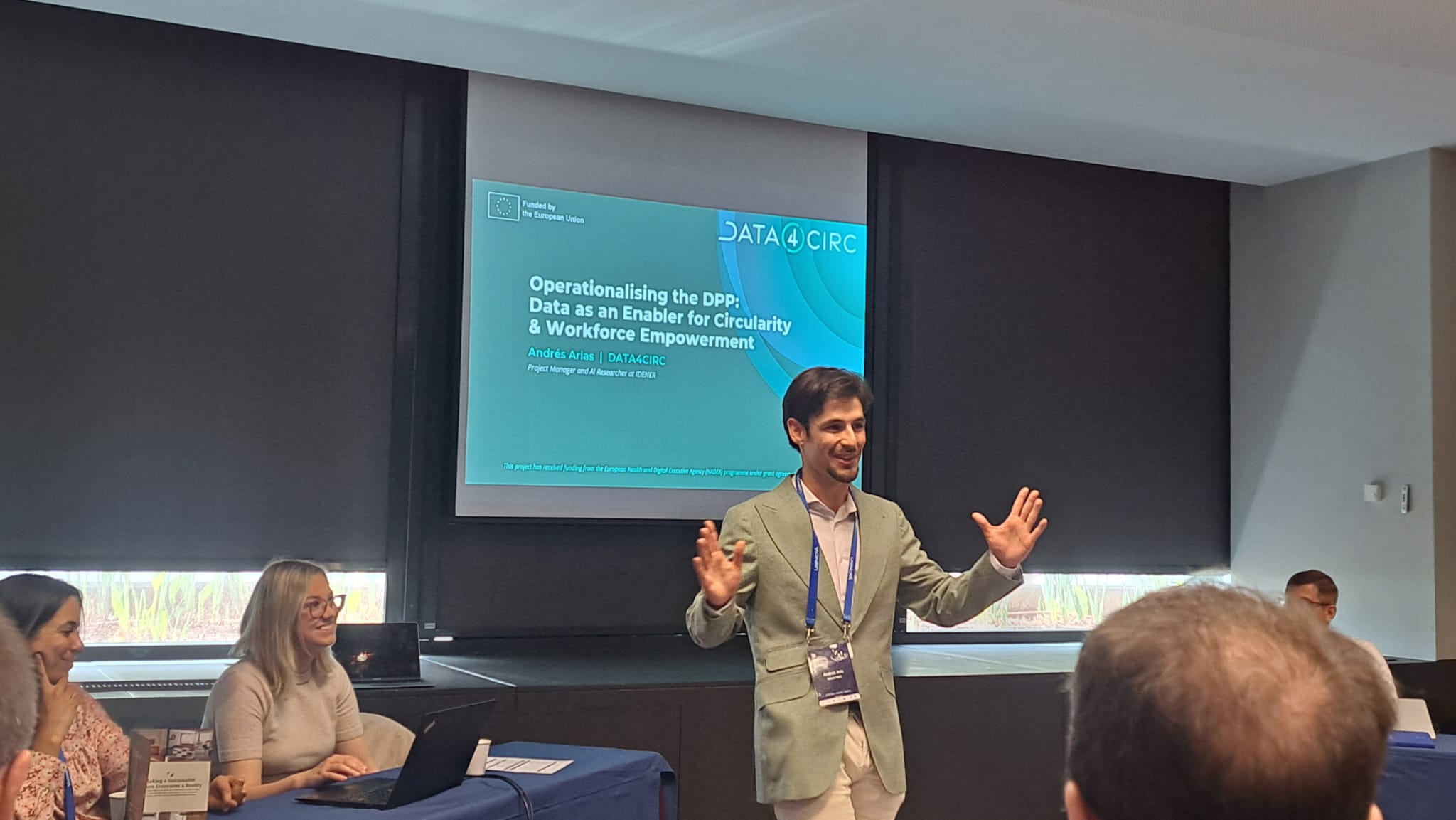
The DATA4CIRC expert Andrés Arias giving his presentation during the session ‘The Digital Product Passport: Traceability in Action’
In his presentation, Andrés Arias also emphasised that the DPP does not operate in isolation. Instead, it acts as a key enabler within a broader digital ecosystem. By integrating with federated data spaces, digital twins, AI-driven Life Cycle Assessment (LCA), and circular synergy detection tools, the DPP helps unlock new levels of collaboration and insight. This is exactly the idea behind the platform being developed by the DATA4CIRC project.
As highlighted during the panel discussion, the operationalisation of data as the backbone of human-centred digital technologies lays the foundation for a more resilient and intelligent manufacturing landscape. Equally important is the integration of end users and policymakers throughout the design and development process to ensure the effective uptake and exploitation of digital solutions.
This interconnected ecosystem allows stakeholders at all stages of the value chain, from manufacturers to recyclers, to access and exchange relevant data securely and efficiently. The result is a more transparent and coordinated approach to circularity, where waste is minimised and value is retained across the product lifecycle.

“The panel provided a valuable opportunity to align and share visions for the future of data and circularity in the manufacturing sector. The DPP is emerging as a cornerstone of product traceability, helping to address data gaps while opening new opportunities for industrial digitalisation.
In this context, the DATA4CIRC consortium has reaffirmed its commitment to innovative digital solutions that empower the workforce of the future and enable more efficient and sustainable industrial processes.”
– Andrés Arias
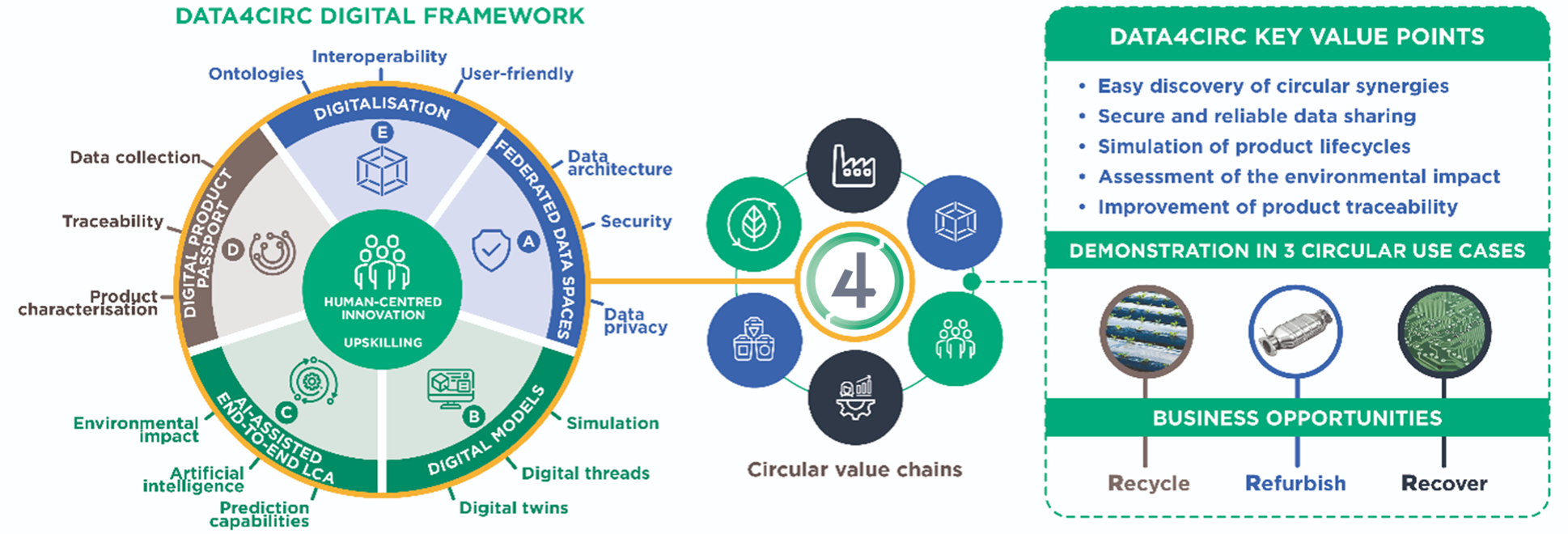
The DATA4CIRC concept © DATA4CIRC 2025

DATA4CIRC experts Candela Bravo (LOBA), Gonçalo Matos (LOBA), and Andrés Arias (IDENER)
The Role of the Asset Administration Shell
A critical technical component highlighted during the panel was the Asset Administration Shell (AAS), a key paradigm in the current landscape. The AAS plays a pivotal role in ensuring:
- Interoperability across diverse industrial systems
- Interpretability of data between stakeholders
- Extensibility to adapt to future requirements
By providing a standardised digital representation of assets, the AAS enables seamless communication between systems, significantly lowering barriers to adoption and scaling of DPP solutions. This is particularly relevant for initiatives like DATA4CIRC, where cross-sector integration is essential.
Empowering the Workforce Through Data and Digitalisation
Beyond technology, the session underscored a broader societal impact: data and digitalisation as enablers of workforce transformation. As industries adopt DPPs and related technologies, new skills and competencies are required.
Digital tools empower workers to make more informed decisions, while also creating opportunities for upskilling and innovation. This human dimension is crucial: successful digital transformation depends not only on systems, but on the people who design, implement, and use them.
“Innovation in circularity isn’t just about building new tools; it’s about connecting the dots between existing knowledge and future needs. Our presence at the stand, powered by an interactive board game, allowed us to move beyond traditional networking and into a space of active co-creation.
By engaging with sister projects and stakeholders through this dynamic exchange of perspectives, we’ve been able to identify powerful synergies and learning from what has already been tested and achieved to ensure we aren’t just reinventing the wheel, but accelerating it.
This flow of feedback and shared experiences at the stand has been vital to ensuring that DATA4CIRC remains a collaborative, human-centered bridge toward a more integrated European manufacturing landscape.”
– Gonçalo Matos

Looking Ahead
The insights shared at the Digital Transformation Summit reaffirm the importance of initiatives like DATA4CIRC in shaping a more sustainable and digitally integrated future. By advancing concepts such as the Digital Product Passport and fostering interoperability through standards like the Asset Administration Shell, the project is contributing to a scalable and resilient circular economy.
As these technologies continue to mature, collaboration between industry, research, and policy will be essential. Events like this summit provide a valuable platform to align visions, share knowledge, and accelerate progress toward a truly circular, data-driven Europe.
We hope you are as excited as we are to continue following the DATA4CIRC journey! You can keep up to date on the latest developments from our project by following us on the DATA4CIRC social media channels:
