
Celebrating International Day of Women & Girls in Science with DATA4CIRC
Published February 2026 © DATA4CIRC
On the 11th February, we celebrate International Day of Women & Girls in Science. The DATA4CIRC project is proud to take an inclusive approach to its work and, to highlight the role our female partners play in the project, we’ve spoken to representatives from each of our three use cases to find out a little more about their work on the project and why they chose careers in science.
What are DATA4CIRC’s Use Cases?
The DATA4CIRC project aims to enhance circularity within the manufacturing sector to facilitate decarbonisation whilst improving competitiveness and boosting the adoption of R-strategies. The project will validate and demonstrate its solutions in three high-impact manufacturing sectors: plastics, electronics, and automotive. The first use case focuses on recycling agricultural plastics, a critical area for improving waste management and resource recovery in agriculture. The second use case addresses the re-manufacturing and repair of Waste Electrical and Electronic Equipment (WEEE), a vital step toward extending the life cycle of electronic products and reducing e-waste. The third use case focuses on refurbishing catalytic converters, a key component for reducing harmful vehicle emissions. In particular, Use Case #3 looks at the recovery of Platinum Groups Metals (PGMs).
We’ve already taken a closer look at plastic recycling in our previous blogs, and we’ll be covering WEEE and PGMs soon; but in this blog, it’s time to introduce some of the women working in each use case:
Introducing our Use Case Representatives for International Day of Women & Girls in Science 2026
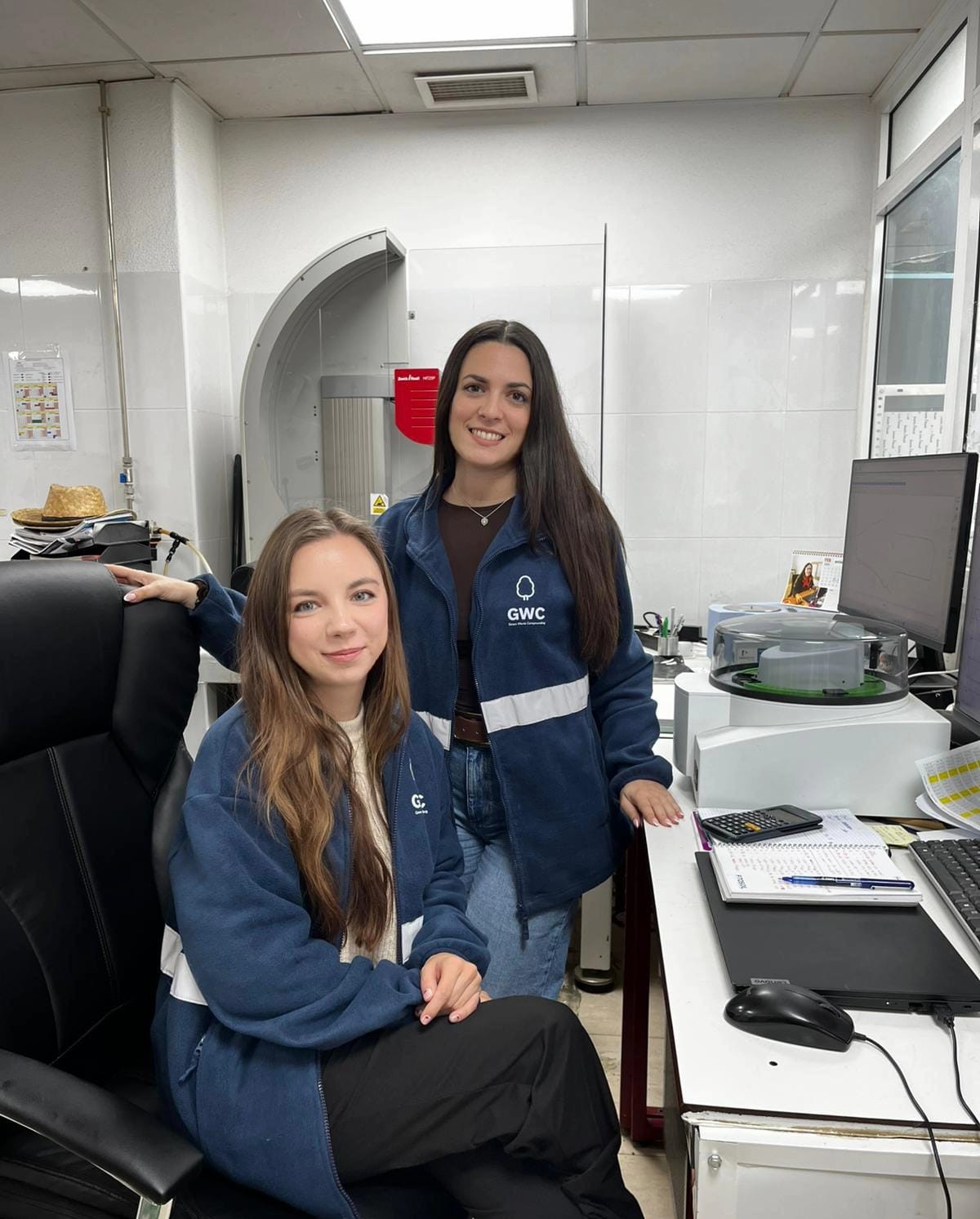
Maria & Natalia at work
Use Case #1: Agricultural Plastics
Maria Carmen – Industrial Chemical Engineer
My name is Maria Carmen. I am an Industrial Chemical Engineer, specialised in Environmental Engineering, and I currently work at Green World Compounding (GWC) as Head of the Innovation Department (R&D). The company’s main activity is the recycling of agricultural plastics, although we are always looking to go a step further by exploring new solutions and innovations. For this reason, we participate in the DATA4CIRC project, where, together with Asociacion Empresarial de Investigacion Centro Technologico del Calzadoy del Plastico de la Region de Murcia (CETEC), we collaborate on Use Case #1, which aims to validate the project’s digital solution and close the loop on agricultural plastics.
Natalia Cwalina – Research & Development Specialist
My name is Natalia Cwalina, and I also work at GWC on Use Case #1, as an R&D Specialist. Within the DATA4CIRC project, my role includes managing and organising project-related data, supporting laboratory activities, and preparing project documentation and reports. Through this work, I contribute to maintaining clear and consistent project information, which supports traceability, data analysis, and coordination within the use case.
Use Case #2: Waste Electrical and Electronic Equipment
Ludovica Baldassari – Chemical Engineer
My name is Ludovica Baldassari and am a Chemical Engineer with over 10 years of experience in innovative hydro-metallurgical processes and pilot plant engineering for critical metal recovery from e-waste, lithium-ion batteries, and other waste streams. I currently serve as Team Leader at Eco Recycling, where I am involved in the coordination, management, and implementation of industrial-scale pilot activities for sustainable recycling technologies. In the DATA4CIRC project, my role primarily involves coordinating Eco Recycling’s activities within Use Case #2, focusing on the recovery of target materials from PCBs through advanced hydro-metallurgical techniques and the effective use of the digital tools developed within the project.
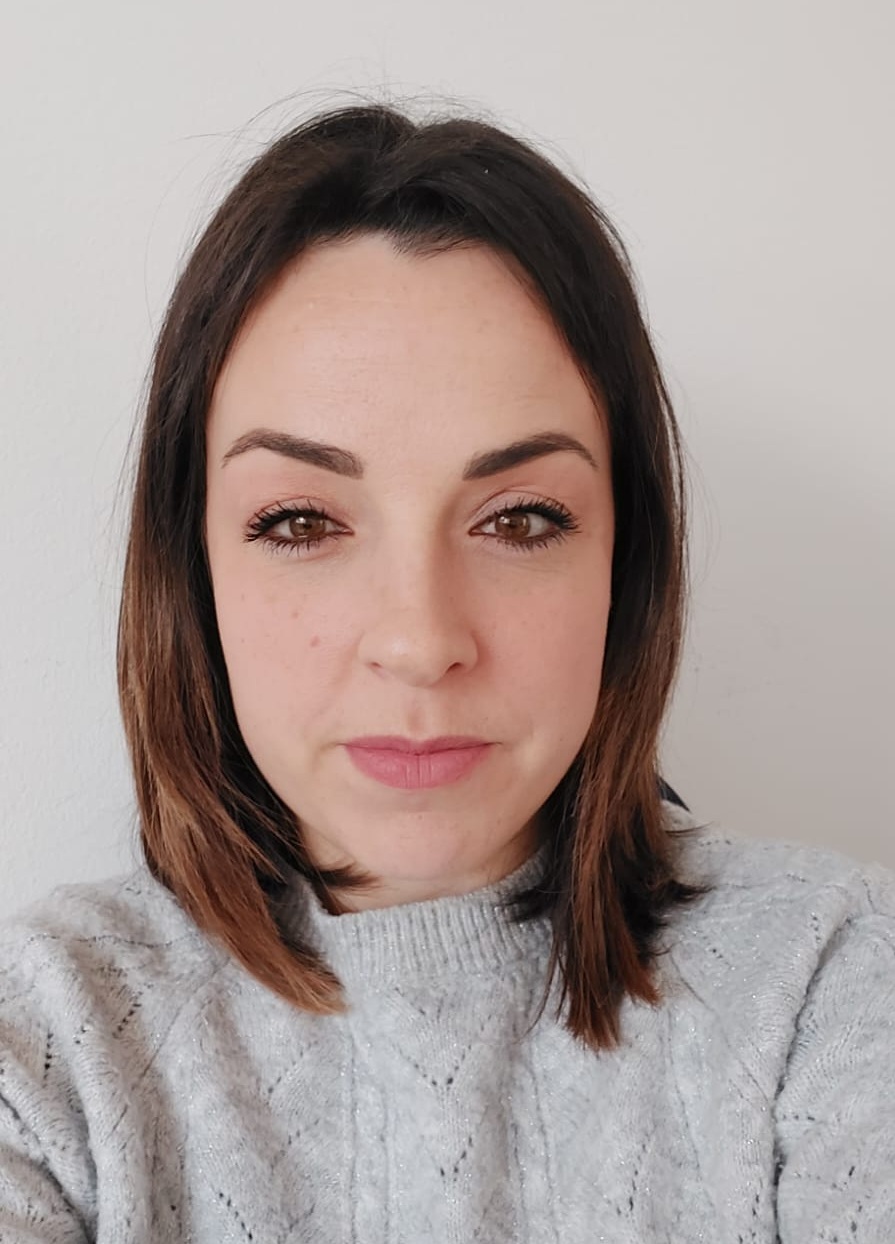
Ludovica Baldassari
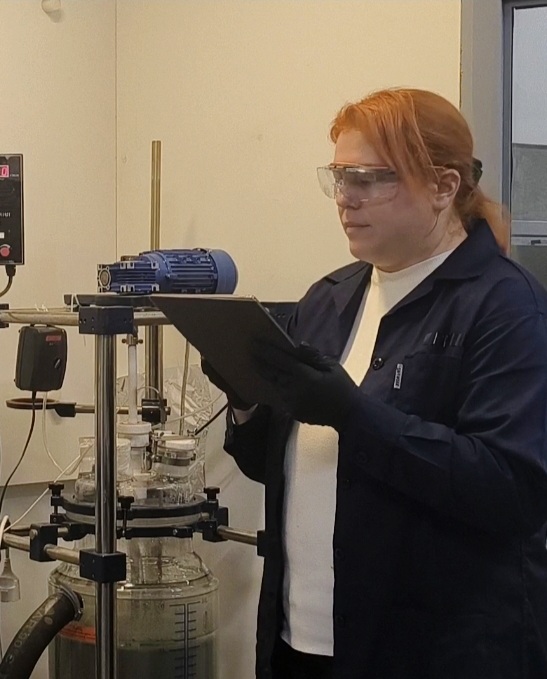
Olga at work
Use Case #3: Automotive Catalytic Converters
Olga Thoda – Chemical Engineer
My name is Olga Thoda and I am also a Chemical Engineer! I completed my undergraduate studies at the National Technical University of Athens, and my PhD in Materials Engineering at Coventry University (UK). I currently work at MONOLITHOS as Head of Research & Training, and I have been part of the company’s R&I department for the past four and a half years. Within DATA4CIRC’s Use Case #3, which focuses on the recycling of Platinum Group Metals (PGMs) from the automotive catalytic converters value chain, MONOLITHOS provides key industrial data that supports the tailored development and adoption of digital tools such as the Digital Product Passport and the Digital Thread.
When did you first decide that you wanted to work in scientific research and what motivated you to pursue a career in science?
 Maria: My interest in research arose during my internships and the preparation of my final degree project, in which I focused on the development of nanocomposites for plastic materials. I was particularly drawn to the plastics sector and the opportunities it offers for improvement and sustainability, which led me to specialise in Environmental Engineering and sustainable processes. Later, I had the opportunity to develop my professional career in a company dedicated to plastic recycling, where I have been able to apply and expand that knowledge in real projects – work that I continue to carry out to this day!
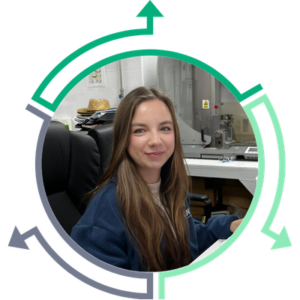 Natalia: My interest in scientific research first started in high school while participating in chemistry laboratory classes. I was fascinated by how experiments were carried out and how chemical processes worked. Later, I chose to study chemistry at university, where I could learn about mechanisms not visible to the eye and how to apply them in practice. I had amazing teachers who inspired me to keep learning and developing my skills. Over time, these experiences shaped my decision to focus on research and development and continue exploring science professionally.
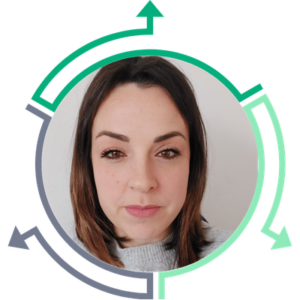 Ludovica: My interest in scientific research emerged during my academic studies in Chemical Engineering, where I was introduced to the application of scientific and engineering principles to address real-world problems. This experience motivated me to pursue a career focused on the development of innovative technological solutions that support industrial competitiveness while enhancing sustainability and resource efficiency. Through my involvement in research and innovation projects in the field of hydro-metallurgy and recycling, I have had the opportunity to apply both my technical and managerial expertise to initiatives aimed at supporting the transition towards a circular economy.
 Olga: My interest in science developed gradually, but it was during my university studies that I realised I wanted to pursue research as a career. I was motivated by the idea that science can help solve real-world problems, particularly those related to sustainability and resource efficiency. The combination of curiosity-driven exploration and the potential to contribute to societal challenges made scientific research feel both meaningful and intellectually rewarding to me.
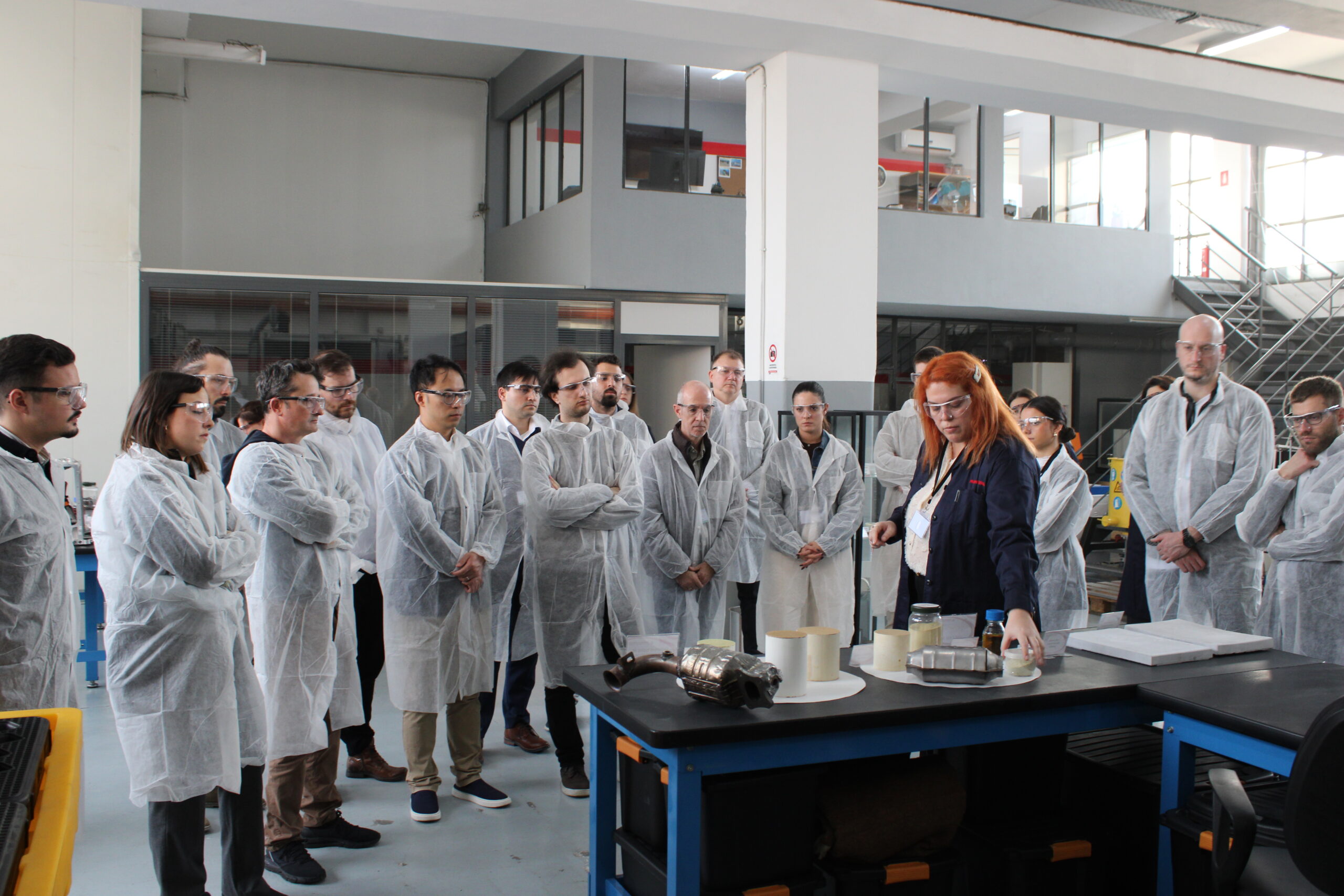
Olga Thoda from DATA4CIRC project partner MONOLITHOS explaining her work to the project partners
What first sparked your interest in your current field of research/work?
Olga: My interest in this field developed through my academic background in chemical and materials engineering and was further strengthened by my industrial experience at MONOLITHOS. Working on real-life challenges related to critical raw materials (CRMs), on the recycling of CRMs from various end-of-life sources, including PGMs from automotive catalytic converters and electrocatalysts, rare earth elements from permanent magnets, and lithium and other critical materials from lithium-ion batteries. Working on these topics highlighted the environmental, economic, and technological importance of recovering valuable materials from complex waste streams and motivated me to focus my research on developing efficient, data-driven recycling and circular economy solutions.
Ludovica: My interest in this field was consolidated when I started working on the scale-up and validation of hydro-metallurgical processes under real industrial constraints. At that stage, I became particularly aware of the gap between laboratory-scale innovation and industrial implementation, especially in the context of complex waste streams such as electronic waste and end-of-life batteries.
What continues to motivate my work is the challenge of translating advanced recovery concepts into robust, efficient, and scalable processes capable of operating under industrial conditions. Hydro-metallurgy offers a high degree of flexibility in selectively recovering critical raw materials from heterogeneous inputs, making it a key enabling technology for circular economy strategies. Contributing to the development of solutions that are not only scientifically sound but also industrially viable remains a central driver of my professional engagement in this field.
Natalia: Ever since I started studying chemistry, I was really interested in how different materials behave. I loved exploring experiments and observing how small changes could create big effects. My interest in materials science and polymers was sparked during my early laboratory work, where I realised I was fascinated by how new materials could create innovative and practical applications. In R&D, I enjoy turning these ideas into real products and improvements, making a direct impact on the development of sustainable materials.
Maria: What has most attracted me to working in innovation is the continuous learning it offers. Training never really ends: there is always a new project that allows you to acquire new knowledge, explore other industries, and broaden your perspective on processes, materials, and technologies. This constant opportunity for learning and discovery is what sparked and continues to sustain my interest in this field.
I should also mention that, both during my time as a student and throughout my professional career, I have been fortunate to work with outstanding professionals who have served as role models and sources of inspiration.
What do you feel has been your main contribution to this project so far?
Ludovica: A significant part of my work so far has involved translating industrial needs into clear and structured inputs for the partners developing the digital framework. This included defining a comprehensive and validated set of user requirements, technical constraints, and regulatory considerations based on the realities of operating pilot plants and managing waste streams at Eco Recycling’s industrial site. By grounding DATA4CIRC’s digital tools in real process data, operational workflows, and compliance requirements, I have contributed to ensuring that the solutions developed within DATA4CIRC are not only technically sound, but also practical, scalable, and relevant for industrial adoption.
Natalia: My main contribution so far has been actively supporting the project’s practical work. Within Use Case #1, I assist with data collection, sample handling, and result documentation, providing the team with well-organised and accurate information needed for analysis. By carefully performing these tasks and keeping thorough records, I help the project maintain a smooth workflow and ensure reliable results, which supports further development and decision-making.
Maria: So far, I consider my main contribution to the project to be providing knowledge and perspective on the operation of the plastic recycling chain, in our case for agricultural plastics, as well as identifying the main challenges and opportunities to improve material quality and the role that DATA4CIRC’s digital tools can play. In addition, I have gathered information and experiences from the team, which will help lay a solid foundation for the development of these tools and facilitate the project’s upcoming progress.
Olga: Our main contribution has been supporting the development and interpretation of data related to Platinum Group Metal flows in catalytic converters recycling value chain, helping to translate technical information into structured datasets that can be used across the project.
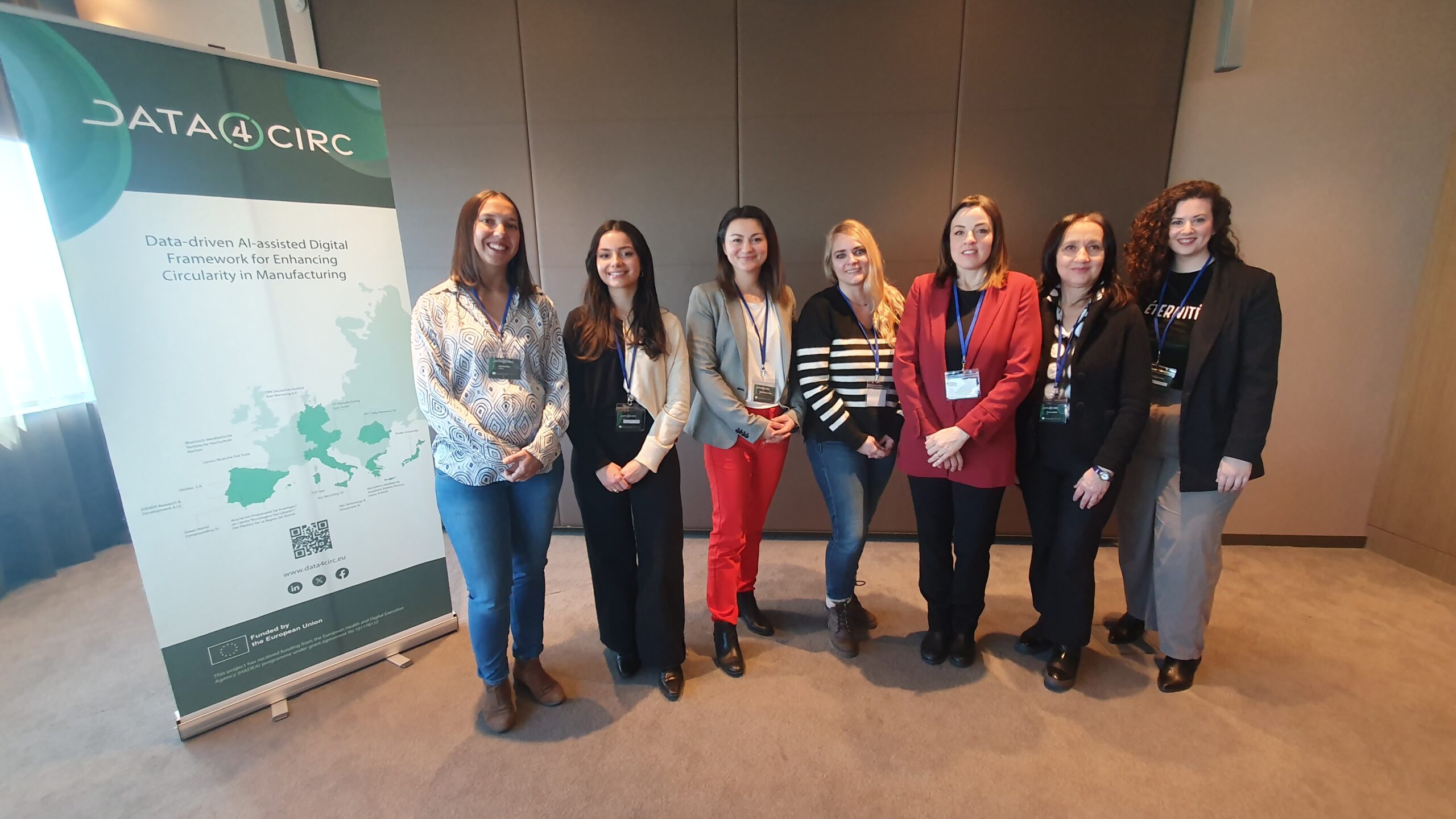
More of the women working on the DATA4CIRC project at the project’s Kick-off Meeting in January 2025 © DATA4CIRC
What message would you share with young women or girls who are considering a career in science or research today?
Natalia: I would encourage young women to stay curious and confident. Science is full of opportunities to explore, learn, and make a difference. The path can have difficult moments, but each challenge is a chance to learn, grow, and strengthen your skills. Don’t be afraid to ask questions, seek mentorship, and take on new challenges. Your perspective and ideas matter, and everyone can find their place in science while developing their abilities and growing both personally and professionally.
Maria: In my experience, I would say that science is ultimately like any field of work that requires curiosity and effort: you shouldn’t be afraid to explore, ask questions, or make mistakes, as every experience is a learning opportunity. Science thrives on diversity of ideas and perspectives, and often, solutions or improvements emerge from mistakes.
Additionally, it is a continuous learning process, because knowledge and techniques evolve very quickly, so patience is essential. In the end, it is experience and ongoing learning that help us grow and become accomplished professionals.
Olga: I would encourage them to be curious, confident, and persistent. Science needs diverse perspectives, and your ideas and experiences matter. Don’t be discouraged by challenges or stereotypes — they are part of the journey, not a sign you don’t belong. Seek out mentors, ask questions, and follow the topics that genuinely interest you. A career in science can be challenging, but it is also deeply fulfilling and impactful.
Ludovica: My message to young women considering a career in science or research is straightforward: pursue your interests with confidence, even when the path appears demanding or unconventional. Science and engineering offer vast opportunities to contribute meaningfully to society, and the perspectives women bring are essential to fostering innovation and progress.
Challenges may arise along the way, but resilience and determination will be key to overcoming them. Seek out supportive mentors and peers, remain curious, and do not hesitate to ask questions or embrace new challenges. Progress in science depends on a diversity of perspectives to effectively tackle the complex challenges of today and the future, and each contribution helps drive this progress forward.
Final thoughts
It was great to gain some insight into the work and interests of some of the DATA4CIRC partners and we are grateful to Maria, Natalia, Ludovica, and Olga for sharing their experiences and thoughts with us! Maria, Natalia, Ludovica, and Olga are not the only women working on the DATA4CIRC project so, on International Day of Women & Girls in Science we also want to highlight the contributions of all the women contributing to the success of the project.
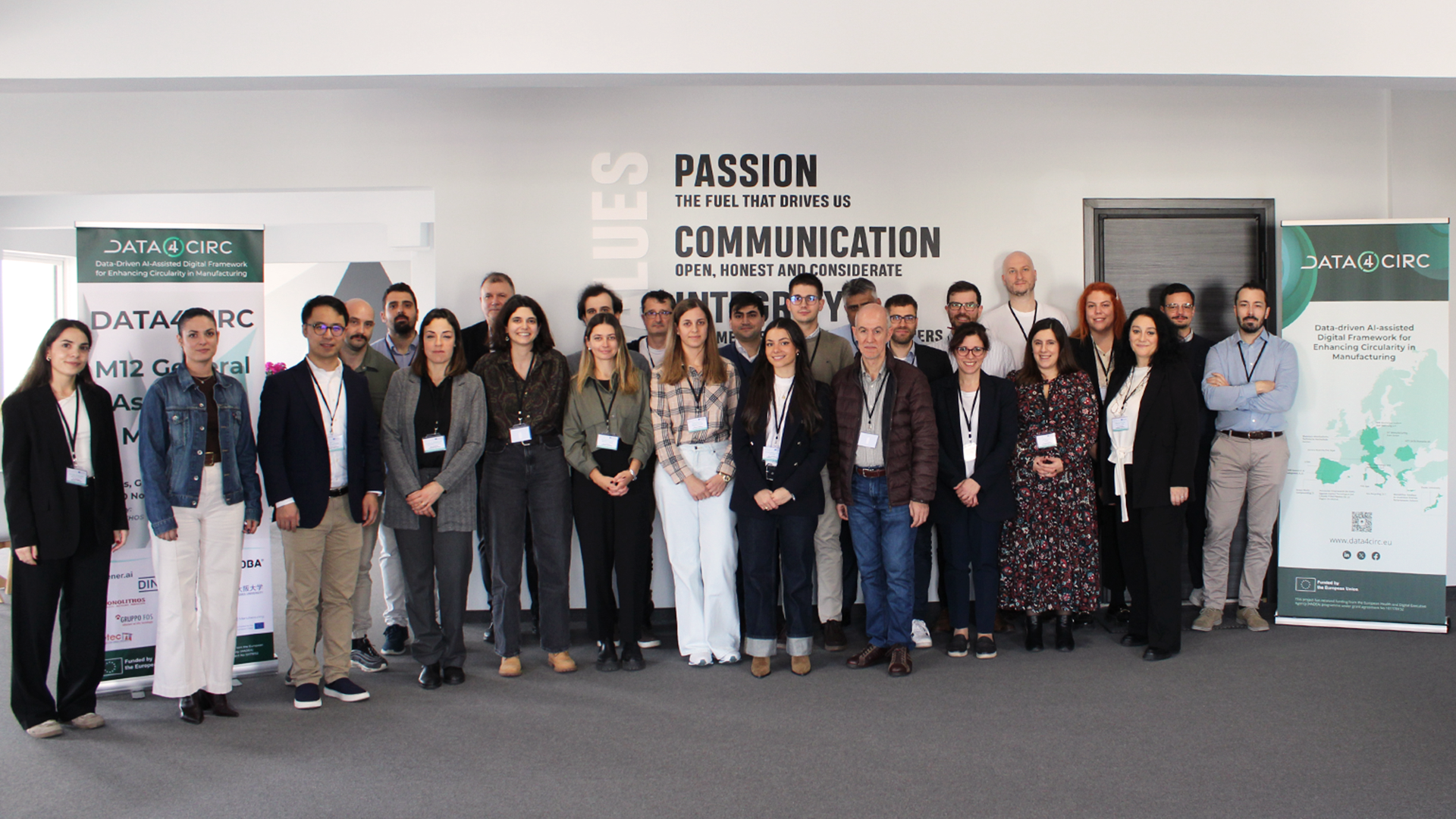
The DATA4CIRC project at the General Assembly Meeting in November 2025 © DATA4CIRC
We invite you to be part of this journey, by sharing your insights, participating in the survey and helping to build the skills foundation for a truly circular future. You can keep up to date on the latest developments from our project by following us on the DATA4CIRC social media channels:
